Infrared Training Center

Showing posts with label electrical. Show all posts

Friday, January 26, 2018

Lens Choice for Looking Through IR Windows

by Gary Orlove
More and more organizations are installing IR windows or sight glasses in their electrical equipment so inspections can be made with an infrared camera.
The advantages are obvious: worker safety is improved as thermographers and electricians don't have to open live electrical cabinets, and inspection times can be reduced.
However, what lens choice is the best to use with your infrared camera to provide adequate resolution, and yet see as much of the electrical equipment as possible?
Here are three images that were taken at a power plant looking at an ISO phase buss. The buss is only about a foot away and is taken looking through an infrared window (crystal type).
25 deg.
45 deg.
90 deg.
Images courtesy - John Fricot, FLIR Systems
As you can plainly see, the 90° lens is clearly the way to go.  It provides enough detail for analysis, yet extends your field of view by a huge amount.

Thursday, November 16, 2017

It is Not Always about Loose Contacts

by Ahmed Osman Mohamed Hamoudy
Electrical PM & PdM Engineer
Cemex, Egypt

In modern industries, there are many predictive maintenance techniques that can be utilized to avoid an unexpected failure. At CEMEX,  we count on those techniques and deploy them in such a way as to get the most use from it, and avoid any undesirable consequences. IR thermography's use has become widespread in cement plants; application areas typically include rotating kilns, insulation, mechanical, and electrical systems.

This article will explore the uses of IR thermography, specifically as part of the Motor Control Center systems predictive maintenance routine, including typical electrical panel failure points (contactor, terminations, feeding breaker, fuses, cables, etc...).

clip_image002
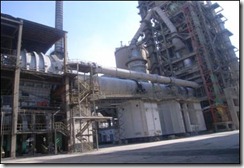
Figure 1. Rotary Kiln

One of the Clinker Rotary Kilns (4,500 Tons per Day) is supposed to be available for operation not less than a year, which is a challenge of course, to guarantee continuous operation for the kiln system for this time without any unexpected shutdown.

Tuesday, January 13, 2015

New Live Webcast Schedule Available

Infrared_EdITC’s successful series of free, live webinars, continues into 2015 with a number of new topics and dates that have been added to the schedule.  We've added steaming video from our production studio for most presentations and have improved the audio quality to deliver a better overall broadcast of the live webinars. On-demand sessions also available:

http://www.infraredtraining.com/webinars

These complimentary educational webinars are designed to provide a valuable overview of thermal imaging and its many applications. Participants learn not only the basics of infrared thermography, but also where IR can reduce costs, save energy and increase safety for professionals across a variety of industries. Attending these sessions also demonstrates why pursuing a professional certification in thermography is a necessary step to becoming a successful thermographer.

If you’re in the electrical, maintenance, or home inspection business, infrared thermography can help you spot a number of issues that your eyes simply can’t see.  Join us for one, or perhaps all, of these webcasts today to learn more!

Registration is now available at www.infraredtraining.com/webinars where you’ll also find a number of on-demand recordings from past live events that can be viewed at any time.

Tuesday, August 26, 2014

Emissivity of a Bees’ Nest?

Level III student Gabe Peer of Travis Electric Company in Nashville, TN recently sent his instructor, Ron Lucier, a set of images he took of a disconnect on a roof unit.  It turns out disconnects on 10 of the 11 units present on this particular roof contained some kind of nest!

Which begs the question…any guesses on what emissivity to use if your fuses are covered with a wasps’ nest? Does it even matter?  All joking aside, I know that a number of thermographers out there have had similar, less-than-pleasant, encounters with wildlife while in the field.  As if dealing with PPE isn’t enough to worry about, from insects, to rodents to reptiles there’s always the potential for a nice surprise to jump out at us from under an electrical cover.

IR_2621 DC_2622

So, for our readers, curious what you have encountered? Anything that you would like to share? Please feel free to comment below or send in your best story with images and/or video and we’ll post it too.

Thursday, June 19, 2014

Interactive Labs: An Important Part of the ITC Learning Experience

electrical panel - closed smallAt our Boston-Regional training facility we have a number of interactive, hands-on, labs set-up around the perimeter of the classroom. All are designed to help re-enforce the principles of thermography taught during a course. Students use these with their thermal imagers to improve their camera skills and learn more about infrared science as part of planned exercises that create a unique and valuable training experience for everyone in attendance.

One of my personal favorites is a simple mock-up of an electrical panel rigged with several thermal anomalies on the inside. Warm breakers, hot connections and more can all be safely inspected in this controlled environment. I use this particular lab in Level I training to demonstrate the concept of indirect heating that we teach as a part of basic heat transfer. This is the physics behind why the temperature you measure on the surface of a component is often much cooler than what is happening on the inside, at the point of failure.

Monday, August 5, 2013

Online Introduction to Outdoor Electrical Surveys using IR Thermography Course Updated

This introductory course is designed to give you a straight forward explanation of how Infrared technology fits in the outdoor electrical inspection industry.

Objectives
  • An overview of a outdoor electrical survey goal and process
  • An outline of industry guidelines and standards
  • A demonstration of images and analysis
  • A summary of reporting capabilities
  • A briefing on additional accessory tools
Course Home Page

Wednesday, January 13, 2010

ITC introduces Live Instructor Led Webinars


Webinars are live instructor led seminars conducted via the world-wide web. Participants listen and interact to the webinar through their own computer. All that is needed is a telephone and high speed internet connection.

The Infrared Training Center introductory webinars are designed to give students a straight forward explanation of how Infrared technology fits into a specific application or industry. The sessions are hosted live by an Infrared Training Center instructor and webinar director.

There are three to choose from:  
  
Infrared Training Center

ITC E-Learning Web Portal


Monday, August 4, 2008

How Hot is Too Hot?


Here a thermographer found a temperature of 134°C on a discharge resistor of a capacitor bank panel. The question is "Is this a problem or is it normal operating temperature?"

Discharge resistors are in the circuit when the capacitor is disconnected. It will be hot by dissipating the energy stored there. The temperature limit would be specific to the resistor specifications.