Infrared Training Center

Showing posts with label thermal imaging. Show all posts

Saturday, October 10, 2020

Online Certification Training Has Arrived

ITC’s new Online Thermography Certification program places you front-and-center in a virtual classroom which means you no longer have to travel to get certified. That’s because online training eliminates secondary costs typically associated with traditional in-person courses including transportation, hotel, meals and more.  All of this while offering you the most flexible and convenient certification options to date.

Pre-COVID-19, all Infrared Training Center (ITC) thermography certification courses were held at hotels, conference centers, or customer facilities. During a typical week, the ITC team could be conducting a dozen or so of these classes globally.  Then, seemingly overnight, the coronavirus pandemic forced ITC to find an alternative way to deliver classes.  

Enter online certification training.

What makes ITC’s online training program unique? It features live, interactive instruction through Zoom teleconferencing.  This isn’t just voice-over-PowerPoint where you’re learning by yourself, isolated from your instructor and your peers.  Participants can interact with both ITC trainers and their fellow thermographers in real-time, just as you can in a typical face-to-face training class.  And while there is some self-directed content, most of the class is delivered live with engaging demonstrations, group discussions, and more. Overseas ITC still maintains a face-to-face component for labs and exams. These classroom sessions, of course, meet all local COVID-regulations and safety protocols.

The response has been overwhelmingly positive and has taken off with Level I and Level II thermography classes which continue to sell out.  As such ITC has been adding dates through March of 2021 and is now in the process of expanding their online portfolio of certification training into more specialized instructional areas this fall. Coming soon, look for online sUAS and OGI thermography training as well in this new format. 

“Our business has always been about live classroom training and we don’t see that going away anytime soon,” says John Keane, ITC Global Director.  “However, the pandemic has necessitated this transition to offer more of our training library online and I see both being an important part of what we do going forward.  Besides the obvious benefits of social distancing, removing the cost of travel which, for some customers, has historically been a barrier, this now allows them to get certified too.”  

Registering for online training is easy with numerous dates and locations available that will accommodate even the busiest of schedules.  And it’s not just for individuals.  For those with larger groups which need training, these online courses are available as an onsite option too.  Contact ITC for a quote to schedule a private class exclusively for your employees that’s tailored to your individual training and certification needs.

Contact ITC to learn more about online certification training.

North America
1-866-FLIR-911
info@infraredtraining.com

Europe, Middle East, Africa
+49 (69) 95009011
info@irtraining.eu

Tuesday, May 19, 2020

New Online Course - Elevated Skin Temperature Screening

The Infrared Training Center is now offering an online Elevated Skin Temperature (EST) screening course for anyone using thermal imaging for this application.

EST screening utilizes thermal imaging to measure the surface temperature of a person’s inner eye corner to detect signs of a fever. While infrared cameras cannot confirm the presence of a fever or virus, they are utilized to help prevent the spread of communicable conditions by identifying individuals who may have a high skin temperature. These readings can then be used to initiate secondary screening, if needed, to verify whether the subject has a fever.

This 4-hour course will cover the setup and operation of several camera models, as well as explain how infrared science applies to EST, and best practices for obtaining optimal results when screening for Elevated Skin Temperature.  Students completing the course and passing the knowledge check will be issued an ITC Certificate of Completion.  Registration for the class is available here via ITC’s online training portal.

Tuesday, July 16, 2019

ITC Acquires New Aerial Viewing System to Augment sUAS Training Classes


The Infrared Training Center is excited to announce the purchase of a Command View System from Camera Motion Research, LLC to be used in sUAS training classes.  This equipment allows for the transmission of live video from an unmanned aircraft system to a control center on the ground as far as 3,000ft (914m) away.

Having the Command View System allows the instructor to demonstrate camera operation techniques and perform specific tasks such as measuring temperature, showing the effects of viewing angle and more, all while from the air.  Not only does this enhance the overall training experience, it allows for up to eight students to view the screen at a time, encouraging participation and improving engagement during flying exercises.

With the Command View System, more students can now experience the correct way to capture qualitative and quantitative thermography data in real time.  It works with a variety of instructional situations and applications too including overhead electrical, agricultural, solar panels and more.  A built-in DVR recorder captures all images and videos taken during flight which can be replayed and discussed while back in the classroom.

Look for the Command View System at upcoming sUAS Level I Thermography and Level I Public Safety Courses from the Infrared Training Center.   Registration for these classes and others is available online at www.infraredtraining.com/schedule or by calling ITC directly at 1-866-TRAIN-IR.

Monday, April 29, 2019

ITC & DroneBase Announce Training Partnership for sUAS Thermography

The Infrared Training Center (ITC) has been named as the official IR training and certification provider for DroneBase, a global drone operations company that provides businesses access to one of the largest small Unmanned Aircraft System (sUAS) pilot networks in the world. DroneBase and its pilots have completed over 100,000 commercial missions in more than 70 countries, offering services across multiple industries including residential/commercial real estate, insurance, telecommunications, construction, and media.  

ITC’s sUAS Level I Thermography Certification course will serve as the foundation for this training that is available to DroneBase pilots where they will learn about the various applications of aerial infrared.  The class is designed for the sUAS pilot who needs the background, skills, and knowledge to properly capture and interpret thermal images.  Besides an overview of the many applications, participants will also learn about infrared science, IR equipment operation and flight safety.

According to John Keane, ITC’s Global Director, “We are excited about having the opportunity to certify DroneBase pilots in the application of infrared thermography and look forward to working closely with their network going forward.”

If you are a DroneBase pilot and are looking for sUAS thermography certification training, the latest ITC course schedule can be viewed here.

Existing DroneBase pilots are eligible for a special rate.  Those interested should contact DroneBase for details.  If you have questions about the sUAS Level I certification course, contact ITC directly at 1-866-TRAIN-IR, +1.603.324.7785 or via e-mail at info@infraredtraining.com.

For more information about DroneBase, please visit their website at www.dronebase.com

Friday, January 26, 2018

Lens Choice for Looking Through IR Windows

by Gary Orlove
More and more organizations are installing IR windows or sight glasses in their electrical equipment so inspections can be made with an infrared camera.
The advantages are obvious: worker safety is improved as thermographers and electricians don't have to open live electrical cabinets, and inspection times can be reduced.
However, what lens choice is the best to use with your infrared camera to provide adequate resolution, and yet see as much of the electrical equipment as possible?
Here are three images that were taken at a power plant looking at an ISO phase buss. The buss is only about a foot away and is taken looking through an infrared window (crystal type).
25 deg.
45 deg.
90 deg.
Images courtesy - John Fricot, FLIR Systems
As you can plainly see, the 90° lens is clearly the way to go.  It provides enough detail for analysis, yet extends your field of view by a huge amount.

Wednesday, January 17, 2018

How the temperature of your nose shows how much strain you are under

Researchers at the University of Nottingham's Institute for Aerospace Technology (IAT), together with academic staff from the Bioengineering and Human Factors Research Groups, have demonstrated that facial temperatures, which can be easily measured using a non-invasive thermal camera, are strongly correlated to mental workload.

It was found that the effect is most pronounced above the sinuses around the nose, and that facial temperatures were reduced as participants carried out tasks of increasing difficulty.

The results show that when people are fully focused on a task, their breathing rate changes as the autonomic nervous system takes over. There may also be a diversion of blood flow from the face to the cerebral cortex as the mental demand increases, although this is the subject of further research.

Read the entire article

Wednesday, December 20, 2017

What the heck is Emissivity? (Part 2)


Fill up two soda cans with hot water and wrap one in scotch tape. Which one will cool down faster? Obvious, right? Check it out, you might be surprised!


Infrared Training Center

Friday, December 8, 2017

What the Heck is Emissivity? (part 1)


Fill two soda cans with hot water and wrap one with scotch tape. Which one will radiate more heat? You might be surprised at the answer! Watch the video to find out why.


Thursday, November 16, 2017

It is Not Always about Loose Contacts

by Ahmed Osman Mohamed Hamoudy
Electrical PM & PdM Engineer
Cemex, Egypt

In modern industries, there are many predictive maintenance techniques that can be utilized to avoid an unexpected failure. At CEMEX,  we count on those techniques and deploy them in such a way as to get the most use from it, and avoid any undesirable consequences. IR thermography's use has become widespread in cement plants; application areas typically include rotating kilns, insulation, mechanical, and electrical systems.

This article will explore the uses of IR thermography, specifically as part of the Motor Control Center systems predictive maintenance routine, including typical electrical panel failure points (contactor, terminations, feeding breaker, fuses, cables, etc...).

clip_image002
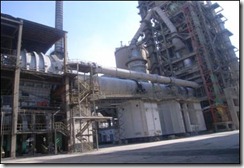
Figure 1. Rotary Kiln

One of the Clinker Rotary Kilns (4,500 Tons per Day) is supposed to be available for operation not less than a year, which is a challenge of course, to guarantee continuous operation for the kiln system for this time without any unexpected shutdown.

Tuesday, October 10, 2017

InfraMation 2018 is Headed to Austin, Texas

InfraMation, the world’s leading IR training experience and thermal imaging conference, is headed to Austin, Texas September 11-14, 2018.  Join other thermography experts from around the world at the downtown Hilton Austin to learn the latest thermal imaging techniques and applications while making valuable connections.

Learn more and register at www.inframation.org


The best deals are now available for a limited time with our Super Early Bird options that include among other items a FLIR E8 thermal imager, the chance to win a FLIR E95 infrared camera, a FREE ITC Certification renewal, and up to $800 off your entire registration.  

More details coming soon including a Call for Papers for those who are interested in sharing their knowledge and experience with other industry professionals, plus sponsorship and exhibiting opportunities too.  Until then, follow us on Facebook (www.facebook.com/InfraredTraining) and Twitter (www.twitter.com/ITCInfrared) with the hashtag #inframation18 for the latest conference updates.

Thursday, September 7, 2017

IR finds Yellow Jackets Nest in House

by Sanin Mulic, Barber Foods

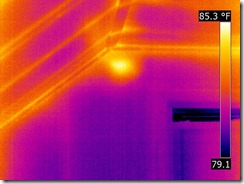
After attending my level one instruction during the week, and ITC wetting my appetite for thermal imaging, I returned home with my company's P-65 camera.  I decided to scan my own house to practice what I was taught all week.  All looked good until I went upstairs and noticed a bright spot on the inside wall.  I took several images of the spot and come Monday, I talked to two level 2 associates about what I had found.  There were several possibilities and I was told to take several more shots at different times to see if it moved or varied in temperature.   When we found it never moved I suggested that it might be insects (wasps, hornets, etc.) and talked with one of the other thermographers who would bring in a stethoscope to see if  I could hear them before opening up the wall.

Wasps  Wasps-vis 
Thermal image of the wasp nest (left).

I couldn’t wait, so that night armed with a drill, a can of flying insect killer, and the enthusiasm of a new thermographer,  I went up to the room; my pet cat, who loves to lay in the window there, had to investigate with me too.   I approximated where the hotspot was and drilled a 1/8 “ hole through the wall board. As I removed the drill bit, about 8 to 10 yellow jackets came charging through the hole and I started to spray the bug spray at the hole.  By this time, the yellow jackets were in an attack mode and I started to swing at them in defense.  Out of the corner of my eye I saw my cat speeding to the door with his tail bigger than I have ever seen it.  I finally killed the last one, sprayed about 1/3 of the can, and plugged the hole; but not before being stung twice.  I went outside and saw a swarm just outside the window. I drilled a second hole a few inches above it and knowing what was going to follow,  I had the spray ready to go as soon as the drill came out.  I sprayed about 1/3 of the can and then plugged the hole. I returned several hours later and the swarm was gone.  I climbed a ladder and found a small hole where they were coming and going.  I plugged that from the outside.  As I came back inside I saw my cat peaking from around the door as if to ask “Is it safe to come out now?”

After a few days I took another thermal image and there was no evidence of the yellow jackets remaining.  I submitted this investigation as my level one field report and it passed, but the memory of this initial experience will last a long time (the cat won’t forget it either!)

No-wasps no-wasps-vis
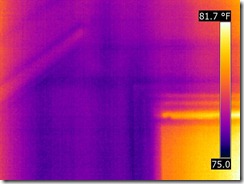
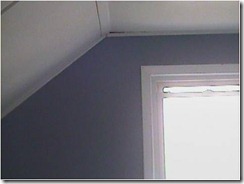
No wasps after removal.

Tuesday, August 29, 2017

Why does my Infrared Camera read higher than my Infrared Temperature Gun?

 ITC Logo TM 250 The answer is, in a word, resolution. Take a look at the image below.

7-20-2010 1-48-44 PM

The infrared camera is able to locate and measure much smaller objects than an IR temperature gun. Note the spot measurement on the infrared image; its reading is 250 F. Contrast that to the average area measurement typical of an infrared gun at a reading of 184 F. The gun is averaging all the hot areas along with the cold areas of the grating we see in the image.

Another common question is why the IR camera reads a higher temperature than a contact temperature probe? Contact temperature probes require an extremely good contact in order to read a decent temperature. In fact these probes measure their own temperature, so if the heat transfer is not good from the substrate, and the probe sensor is colder than the surface, the temperature will be lower. Also remember that contact thermometers act as heat sinks, sucking heat out of a surface.

Wednesday, August 23, 2017

IR Pictures Through a Grating or Mesh

Question from a customer: “Scanning through the steel grating I read a temperature 5 to 15 degrees Celsius lower than scanning without the grating. I know it is to do with the steel grating but I was wondering why.”
Great question. Let’s take a look at a typical situation with and without a grating, and then placing the grating at different distances to the camera.
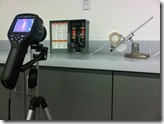
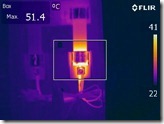
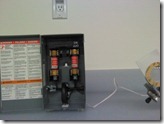
The distance between the fuse and the camera remains constant, and the camera is always focused on the fuse. The only changes are the insertion of the grating, and the distance of the grating from the infrared camera.
IMG00077-20120215-1115IR_0001DC_0002
Figure 1. Looking at a fuse directly with no grating. Max temperature is 51.4 C.
IMG00078-20120215-1116IR_0003DC_0004
Figure 2. We have inserted the grating close to the fuse.
Max temperature dropped to 51 C, a small error.

Tuesday, February 7, 2017

Call for Papers: ITC International User Conference - September 2017

Main paper presentations at the 2014 ITC User Conference in Stockholm, Sweden
Join the biggest ITC event in Europe and contribute with a paper, poster, or seminar!

ITC and FLIR Systems invite you to share your thermography expertise with other professionals in your field at the ITC User Conference in Coventry, UK, on September 27–28, 2017.

The ITC User Conference is a professional meeting place for technicians, engineers, scientists, and users of all types of infrared measurement equipment. It will cover infrared physics and its applications in a wide variety of fields, from inspection of electrical installations, building surveys, industrial and automation applications, optical gas imaging to NDT and advanced research applications.

Seminars, presentations, and poster sessions all depend on you and your contribution, so we ask you to submit your conference paper now:
  • Long paper - duration of the presentation about 40 minutes
  • Short paper - duration of the presentation about 20 minutes
  • Poster
  • Seminar - highlight trends and technologies with future importance for the field of thermography and infrared measurement.
The conference language is English.

Please submit the title and abstract by April 15, 2017 to Christiane Buchgeister at se@irtraining.eu

Abstracts
FLIR Tools was just one of the many seminars offered at the 2014 event in Sweden

Abstracts to be no longer than 500 words. The following information to be included: preferred type of presentation, title, primary author and affiliation, co-authors and affiliations, primary author’s contact details (full postal address, phone number, e-mail address), list of key words.

Notification of Acceptance or Refusal

ITC EMEA will notify all authors of its decision on 20 May 2017. This notification will include
instructions for the selected authors on how to prepare and submit their finished paper by August 14, 2017.

To encourage the exchange of applications, information, primary authors presenting their papers will attend the conference for only € 199.

If you would like to attend the event without presenting a paper, simply register at
www.infraredforum.eu/register or visit the conference website at www.infraredforum.eu
or email us at training@flir.se for more information.

Monday, January 30, 2017

New Training Dates Announced for sUAS Level I Thermography Certification

The new sUAS Level I Thermography Certification course from the Infrared Training Center (ITC) is designed for thermographers who require training specific to aerial IR inspections.  This class will cover all the potential applications, types of equipment used, what business opportunities exist, the infrared science behind how the technology works and the required regulations one needs to follow to enter this new and rapidly growing field.  As such, part of the course will also focus on introducing students to the FAA Part 107 rule which is required for all commercial sUAS operations in the United States.  

The following dates and locations have been announced in 2017:

Atlanta, GA
April 25-28

Boston, MA (ITC Headquarters - Nashua, NH)
May 15-18

Dallas, TX
June 6-9 


King of Prussia, PA
August 22-25

Nashville, TN
September 19-22

Learn More and Register Here

Attendees who successfully complete all course requirements, including their field assignment, will receive a sUAS level 1 Infrared thermography certification from ITC.

Wednesday, January 4, 2017

New Online Course - Introduction to FAA Part 107 Small Unmanned Aircraft Systems

The FAA has developed regulations to allow the operation of small unmanned aircraft systems (sUAS or drone) in the National Airspace System (NAS) for purposes other than hobby and recreation. The rules are specified in 14 CFR part 107 and address UAS classification, certification, and operating rules.

This course is designed to introduce applicants wishing to operate a sUAS for commercial purposes to Part 107 knowledge. In addition, we include an infrared thermography primer for those wishing to use airborne thermography as an inspection tool.

Course Structure
This course can be taken on a computer, tablet, or a smartphone. For the best experience, we suggest a device with a larger screen for easier readability. It will take approximately 1.25 hours to complete this material.

At the conclusion of each lesson, there will be a knowledge check followed by a lesson summary.

At the conclusion of the course, you may then print a course completion certificate. Presenting this certificate when registering for an instructor led Level I sUAS Certification Course will entitle you to a discount equal to the purchase price of this online course.

Learn More

Tuesday, December 22, 2015

Inspecting Solar Panels with UAVs


New video to show you featuring a FLIR thermal imager mounted on a UAV inspecting solar panels for damage.

This application of infrared thermography has come a long way and now, with a new aerial perspective, is an extremely efficient tool for maintenance and quality assurance inspections of solar systems. In contrast to time consuming traditional methods, large solar installations can now be inspected quickly from the right distance and view point.

Even with these advancements in the technology, however, a thermal imager still does not have the ability to detect problems on its own – you still need a qualified operator with the right knowledge and skills to use it properly.

That’s where ITC can help with training and certification! Check out our website for a complete list of course locations and dates now available through September 2016.


Wednesday, November 4, 2015

New Live Webcasts and On-Demand Webinars

Learn the basics before getting certified with free live webcasts and on-demand webinars from ITC! Topics now scheduled into January 2016 that provide a valuable overview of thermal imaging and its many applications.  

Learn more and register here, plus get access to 20 on-demand webinars that are free and available for viewing any time: 

www.infraredtraining.com/webinars 

Besides US-based live webcasts and on-demand webinars, ITC also offers European-based sessions with more convenient times for those attending internationally: 
http://www.irtraining.eu/en/webinars/webinars.html

Live Webcasts - North American Broadcast Schedule
November - January

FLIR Tools Software Basics
Friday, November 6

FLIR Tools+ Advanced

Friday, November 6

Introduction to IR for Building Systems
Friday, November 13

Introduction to IR for Electrical Applications

Tuesday, November 24

Hands-On Operation of Your FLIR Thermal Imager

Friday, December 11

Building Moisture Inspection Basics

Friday, December 18

Overview of IR Optical Gas Imaging Webinar

Monday, December 21

Infrared Thermography Basics
Wednesday, December 30

Thermographer Q&A: Capturing Great Thermal Images

Friday, January 8, 2016

Monday, November 2, 2015

The Shadow Man Cometh

By Ronald Lucier, ASNT NDT Level III, Infrared Training Center

When I use the term “Radiation Heat Transfer” in my classes I sometimes get puzzled or even frightened looks as some folks associate the term radiation to Chernobyl and atomic weapons. It takes only a few minutes and a couple demonstrations to put them at ease though.

One of the simpler demonstrations is done outdoors on a sunny, warm day. It is common knowledge that the Sun is HOT – roughly 6000 ˚C or 10800 ˚F. Happily the Inverse Square Law and our atmosphere attenuate the thermal radiation to livable levels here on Earth!

But it is still thermal radiation! What happens if we interrupt that radiation? A simple experiment is to take a thermal camera into a safe area, like a parking lot, and create your own shadow!

I did this in the middle of my street the other day. Fortunately we don’t get much traffic, usually only the postman drives by and that’s to turn around and deliver mail.

Setting my camera up (a FLIR T650sc) to record a radiometric .csq file, I started recording and walked into the scene and made a shadow. The change in roadway temperature WAS INSTANTANEOUS! After 30 plus years in the business we sometimes get surprised and I was! Look at the raw plot data, ignore the spikes and where I walked into the scene:

fig 1

The two spots started out at the same temperature. Just look at the table data.

Time (sec)

Roadway

Shadow

Difference

0:00

98.2

98.3

0.1

9.37

98.9

98.5

-0.5

14.77

99.1

97.7

-1.4

22.2

99.4

97.2

-2.2

29.8

99.7

97.1

-2.6

50.13

99.9

96.1

-3.8

61.6

100.0

95.5

-4.5

67.3

100.0

95.4

-4.6

All temperatures are in degrees Fahrenheit.I stopped taking data at 67 seconds as it was indeed a partly cloudy day and the clouds came by. Here are my start, middle and end jpegs:

image image image

Engineers love graphs so I can’t resist! I took five seconds of data and drew a trend line through both sets to show that the roadway wasn’t cooling, just the shadow.

image

This doesn’t require a high end camera such as the FLIR T650sc – any IR camera, a little Sun, an absorbing surface such as a sidewalk or even a wall will suffice.

The best way to learn is to teach! I encourage all the readers of this article to go teach your friends, co-workers and family a little bit about radiation heat transfer!

Wednesday, September 30, 2015

InfraMation 2016 - The Leading IR Training Experience

InfraMation, the leading IR training experience and thermal imaging conference, returns to Las Vegas and the Rio All-Suite Hotel and Casino September 26-29, 2016.  Registration is now available at www.inframation.org

The main conference will run Tuesday, September 27 through Thursday, September 29, with a pre-conference training day scheduled on Monday, September 26.  Join other thermography experts from around the world to learn the latest thermal imaging techniques and applications while making valuable connections!

And don’t just take our word for it…check out this video to see what past InfraMation attendees are saying about their experiences at the world’s largest conference for professional thermographers:


The best registration deal available for a limited time is the Platinum Package that not only includes full access to all four days of the event and conference meals, but also a FLIR C2 compact thermal imager, free ITC certification renewal, and entry into a drawing for a free FLIR E8 infrared camera.

The pre-conference training day on Monday, September 26, is a must for any thermographer looking to expand their knowledge in one of four available educational tracks that include two new certificate training areas: 

  • Optical Gas Imaging and Research & Science 
  • FLIR Tools Software and Thermography Inspections with UAVs 
  • Advanced Thermography for Condition Monitoring – Certificate Training 
  • Fundamentals of Thermography & Home Inspections – Certificate Training
More details coming soon including a Call for Papers for those who are interested in sharing their knowledge and experience with other industry professionals, plus sponsorship and exhibiting opportunities too.  Until then, follow ITC on Facebook (www.facebook.com/InfraredTraining) and Twitter (www.twitter.com/ITCInfrared) with the hashtag #inframation16 for the latest updates on InfraMation 2016.  See you in Las Vegas!